The road to success is full of challenges
We were lucky enough to head over to Denmark recently for the European 70.3 Championships. This was the 1st time this event was being held outside of Germany and the local Ironman team were keen to ensure that this switch was seen as a success. In my view, this was an outstanding event. A challenging course with lots of twists and turns in each of the three disciplines, superb organization that was well thought through for athletes and a stunning venue based around the beauty of Elsinore harbour and Kronberg Castle. The local people were incredibly welcoming and helpful. The weather on race day was also perfect. Cloudless skies and the temperature rising with every hour, so all the more incentive to get to the finish-line as fast as possible!
It was also my first time to be involved in an Ironman Championship event. The scale of the production was huge, so much grander than an ITU sanctioned event and with 2500 athletes there was a fantastic buzz around the whole race village. It felt more like a festival than a race event. The build up to race day was full of excitement.
We arrived on Thursday and had plenty of time to get our bearings, reccie the courses and ensure that registration was taken care of before the crowds arrived. At registration I had to make my first key decision of the race. Which of the swim waves did I want to start in? It was a self-selecting process with the fastest swimmers heading off first. The cut off for the 1st wave was 35 minutes and I estimated that I should be capable of completing 1900m in just about 35 mins, therefore I opted to start in this first wave. Anyone who has been following my blog will know that the swim has been my achilles heel over the years of triathlon and so to now have developed to the point where I can be classified as part of the fastest group of swimmers is a massive achievement for me. Before I’d even set foot in the water I’d accomplished something and was taking huge confidence into the race.
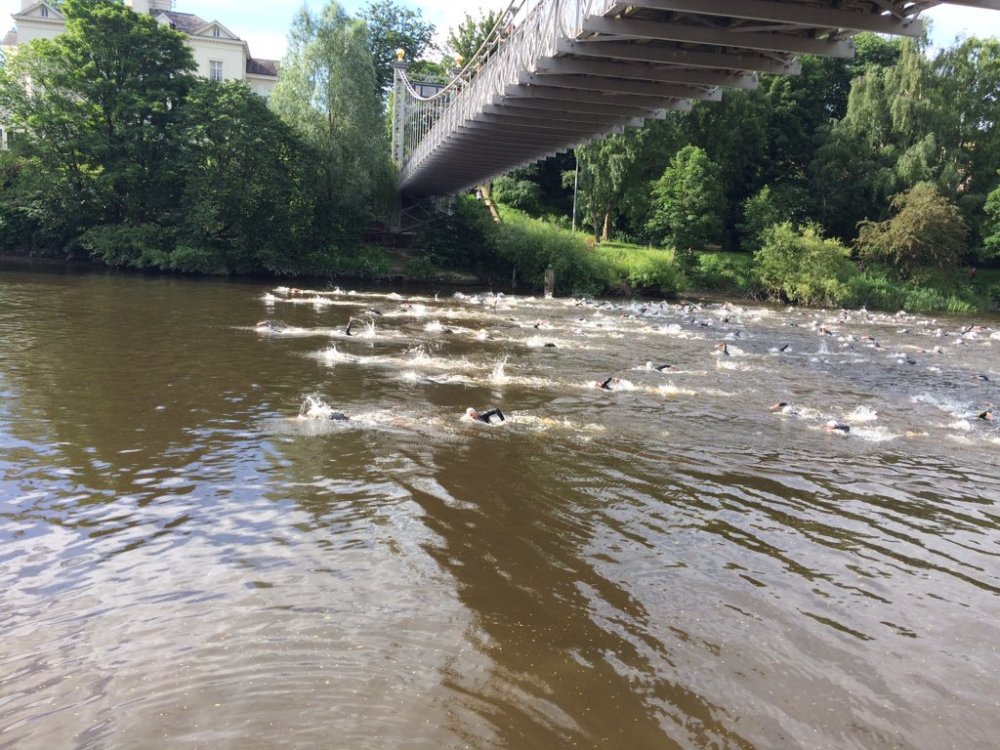
To minimize chaos at the start, Ironman are now using rolling starts whereby only a small number (in this race it was 4 people) will pass over the start mat every 10 seconds. This provides a bit more room to get into the swim at the beginning and find some rhythm. After a good warm up in the harbour, getting used to the water temperature of 15% the blue caps, (that included me), were called out and asked to head for the start funnel. My plan had been to try to position myself towards the back of the blue wave so that most of the really quick swimmers would be infront of me, but I seemed to find myself somewhere in the middle and once the mass of bodies began to move towards the start mats I simply had to go with the flow. Oh well, I’m sure it will be fine I told myself.
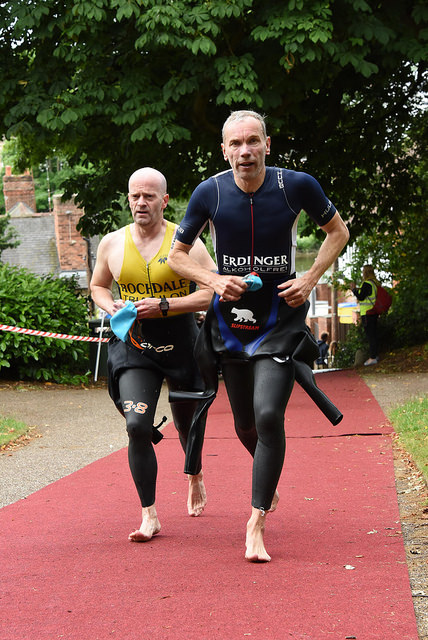
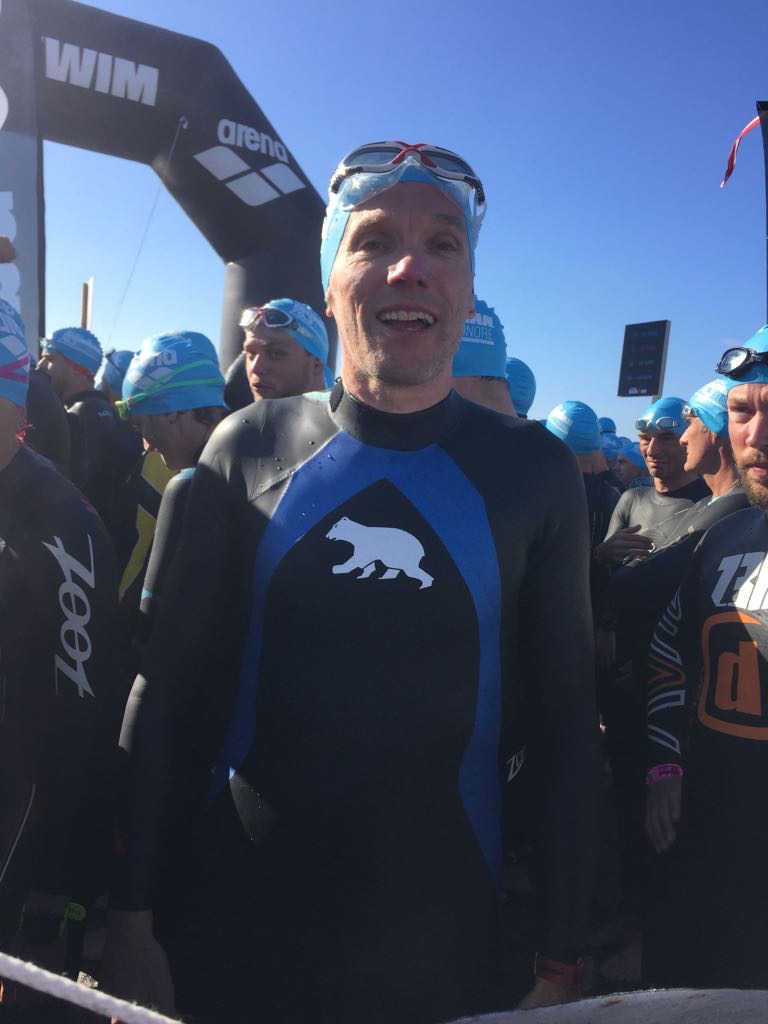 Kathy found me as the mass of neoprene clad humanity inched forward towards the jetty, we had a little pep talk and a kiss for good luck and then I was off into the water. I felt really good as we headed for the first turn, enjoying the sense of rapid forward progress that comes from swimming in a pack. Early on I was holding my own and got around several more bouys without incident. Then things started to get messy. A flailing arm ( not mine I must add) knocked my new goggles sideways but somehow I managed to adjust them without losing too much momentum, but then an endless stream of faster swimmers used me as a kickboard and I found myself getting agitated and then angry. I was hurling abuse (in my head) and trying to hold my position in the water. I realised getting angry wasn’t helpful, refocused on relaxing again and decided to try to get a bit closer to the harbour wall where there might be a tad more room. A few more bouys to negotiate and then I could see the exit arch ahead. I was glad to get out of the water, still a bit shell shocked at the dogfight it had been, but at the same time feeling as though I’d coped pretty well. You can see from this picture at the swim exit just how discombobulated I look as I emerge from the water.
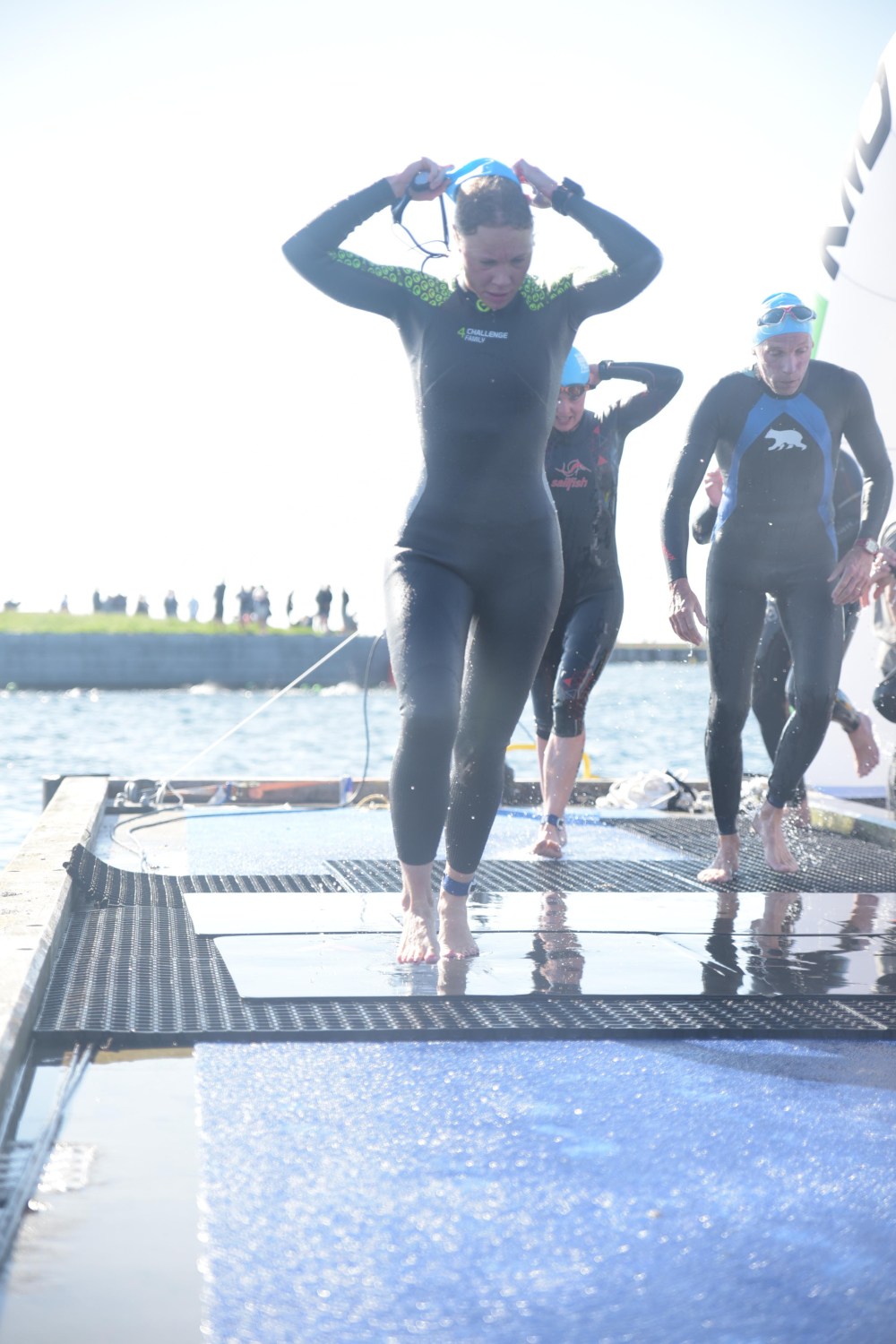
Kathy was positioned by transition and shouted out to me that I’d been going 36 minutes and I assumed this was the time to where she had seen me rather than for the swim itself. Based on this information, I was reassured and set off on the 90km bike leg in really good spirits.
I’d ridden most of the bike course over the previous few days and knew that it was going to be fast, with a high numbers of tricky corners but no daunting leg stinging climbs. The first 10k or so was along the coast into the wind and with lots of similarly matched cyclists I was on high alert not to be seen as drafting. At times it is difficult, but with either a short sharp effort to overtake or a brief pause to take a drink I was able to maintain the legal 12m distance between myself and others. Distance markers were given every 10km and so early on I worked out that a sub 2:30 bike split could be achievable. As each 10km was ticked off I was still holding this pace.
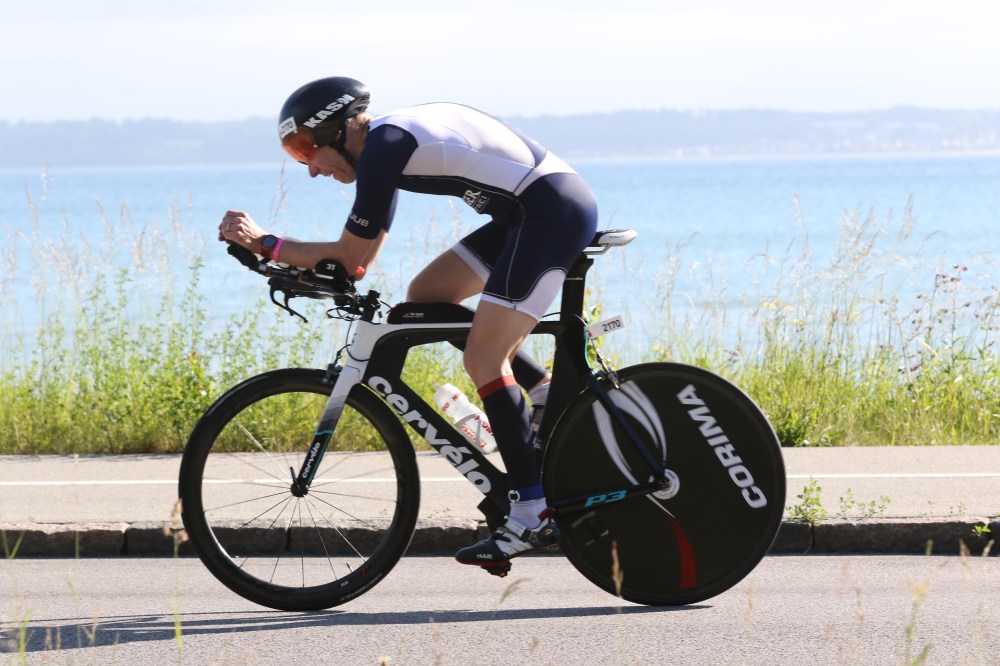
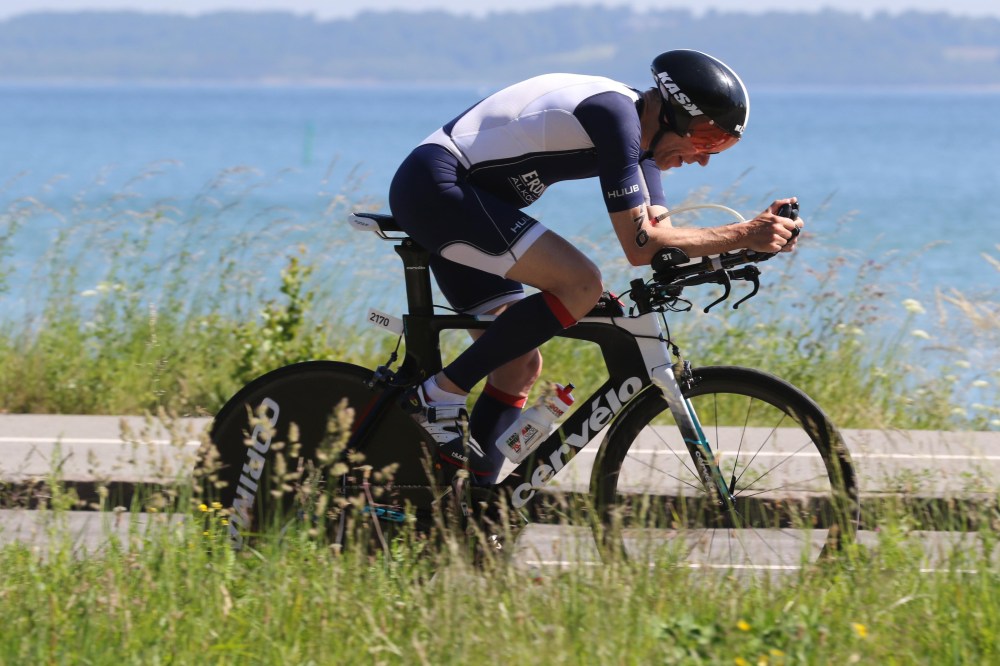 As we came back into town around 65km and headed out on the second part of the course I was starting to struggle with overheating. My head felt so hot, but frustratingly pouring water onto my helmet did nothing to provide relief.
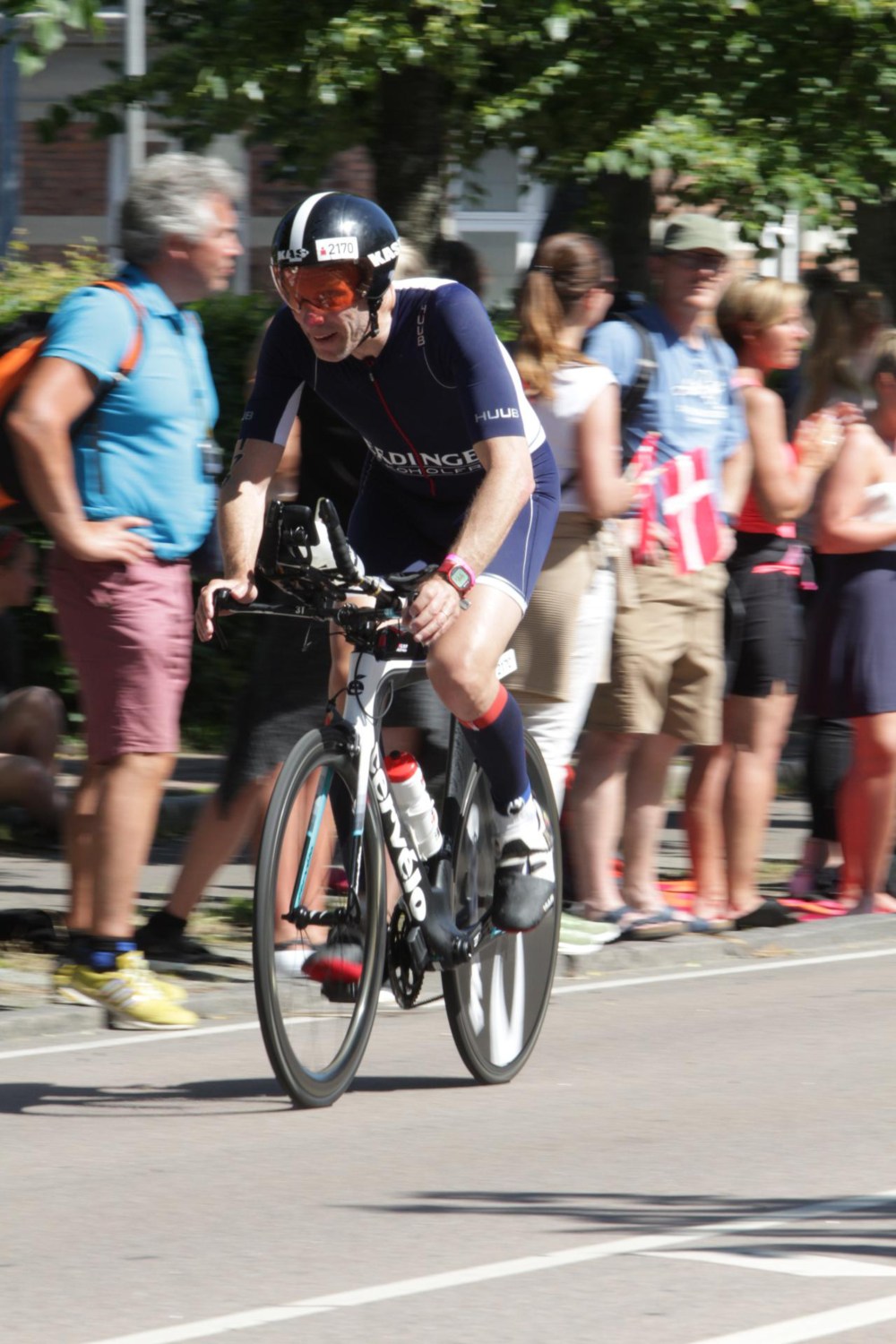 My aero helmet only has minimal ventilation and over the last 30km my core temperature was probably continuing to rise. Despite feeling more uncomfortable I was able to hold my speed and got back into T2 well under 2:30.
I knew at this point that I was well on course to smash my pre race goal of going Sub 5. A half decent run around 1:35 would put me close to 4:45 finish time and the run is my strength so I grabbed a couple of gels, sunglasses and visor to keep the sun off my face and set off on the half marathon with much excitement. My plan was to take the first lap of 4 very steady and then build the pace as each lap went on. My legs felt good as I followed the route around the outside of bike transition, but after a few minutes I became aware of just how hot I was feeling and how high my heart race was getting. I needed to get to the first aid station to grab water and get it over my head. Having walked through the aid station I felt a bit better and set off again towards the castle but pretty soon realised that my temperature was shooting up again. In a quiet shady section of the course I took another sneaky walk before coming out into the crowded streets of Elsinore. The first lap was really difficult as I had to reassess my plan.


I figured that my body temperature was out of control and so decided that the best way to get to the finish was now to treat this run as an interval session, with recovery coming at each of the aid stations where I would walk, get as much water over my head as possible, sip on electrolyte solution and generally try to get my heart rate down. Once I’d made this new plan it became so much easier to execute the rest of the race. I kept an eye on the clock and knew that my pre race goal of Sub 5 was still achievable. I knocked off the laps, focusing on getting from one aid station to the next as efficiently and relaxed as possible.


Soon I was going around the castle for the final time and within sight of the finish shoot. I saw my name come up and the timer ticking over towards 4:58. I’d done it, but wanted to see if I could cross the line before the clock got to 4:58. A last burst and I got there in 4:57:59.


It was great to know that I’d achieved my Sub 5 goal, but I knew that I’d run really badly. Kathy was waiting at the finish area and I was so pleased and relieved to see her. The physical effort of putting it all out there always seems to trigger tears and this race was no different. This time it was especially poignant as it was Fathers Day and I was suddenly overwhelmed with thoughts of my late dad who would have been so proud to know that I had achieved another significant goal.
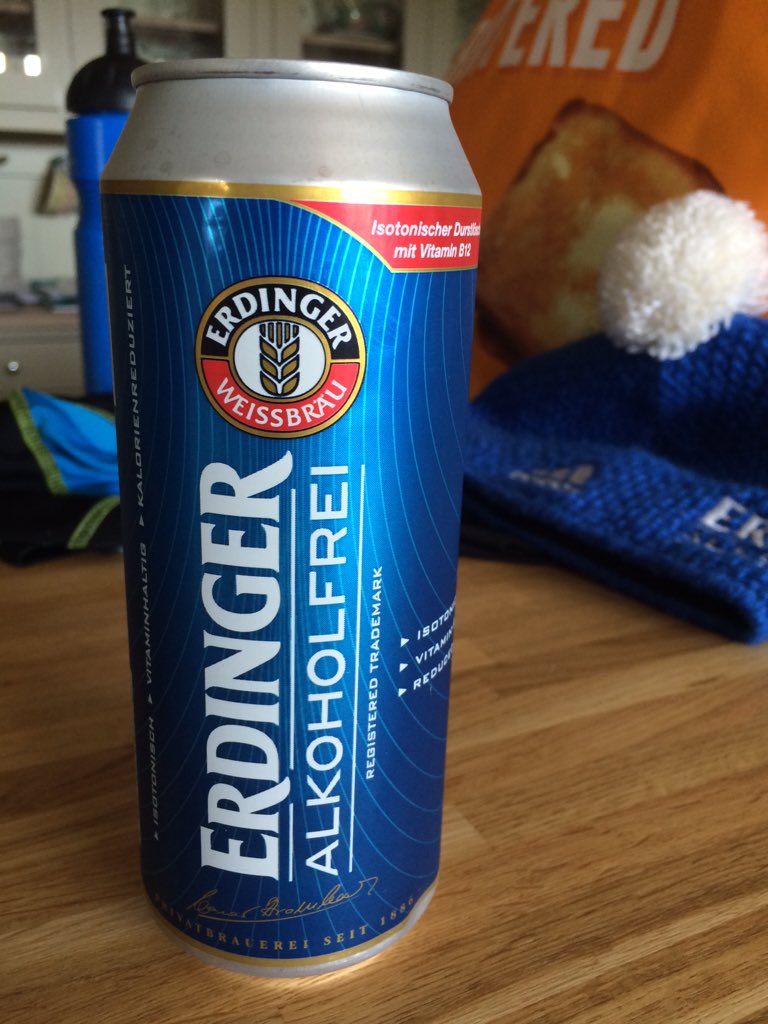
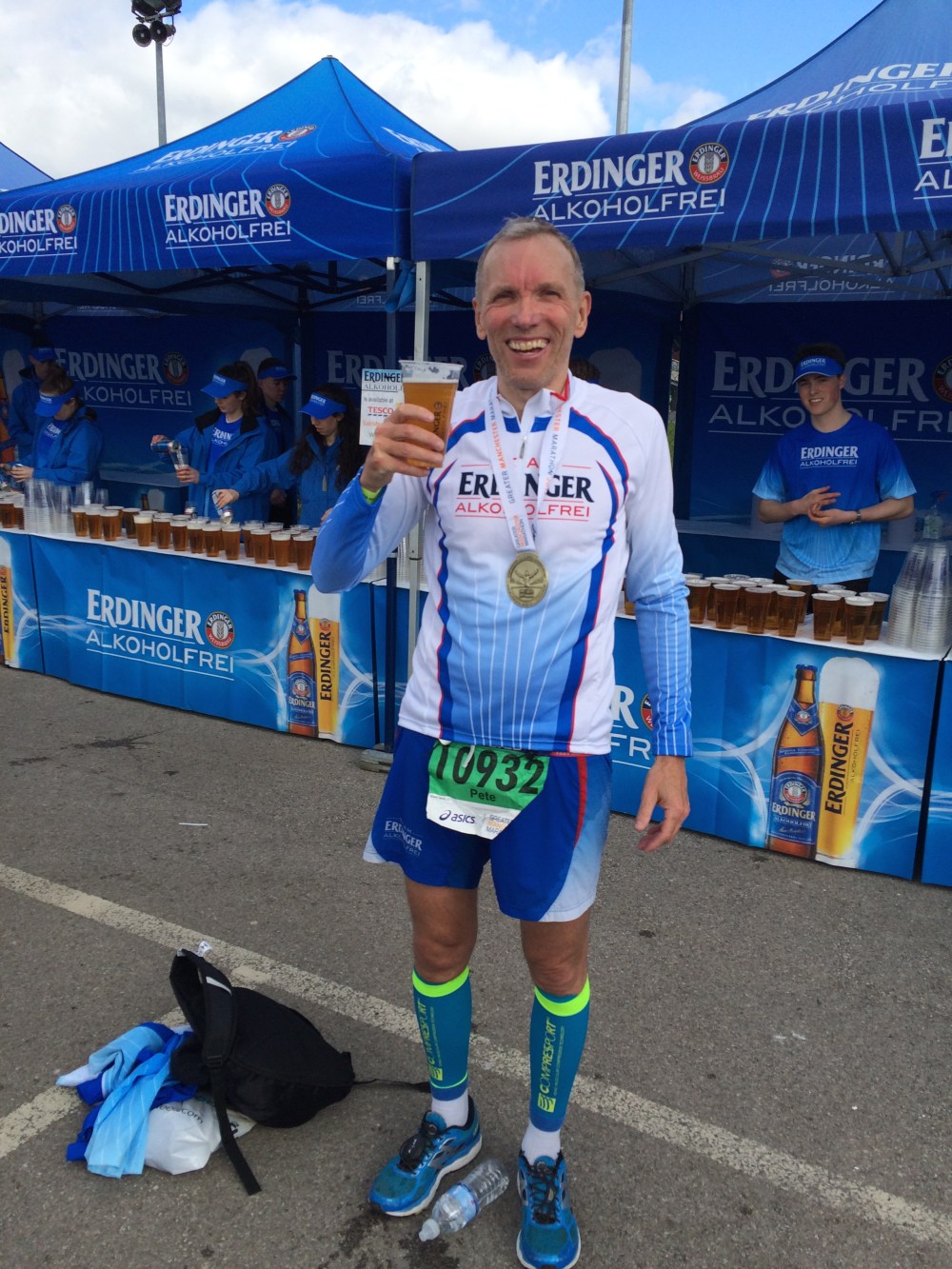
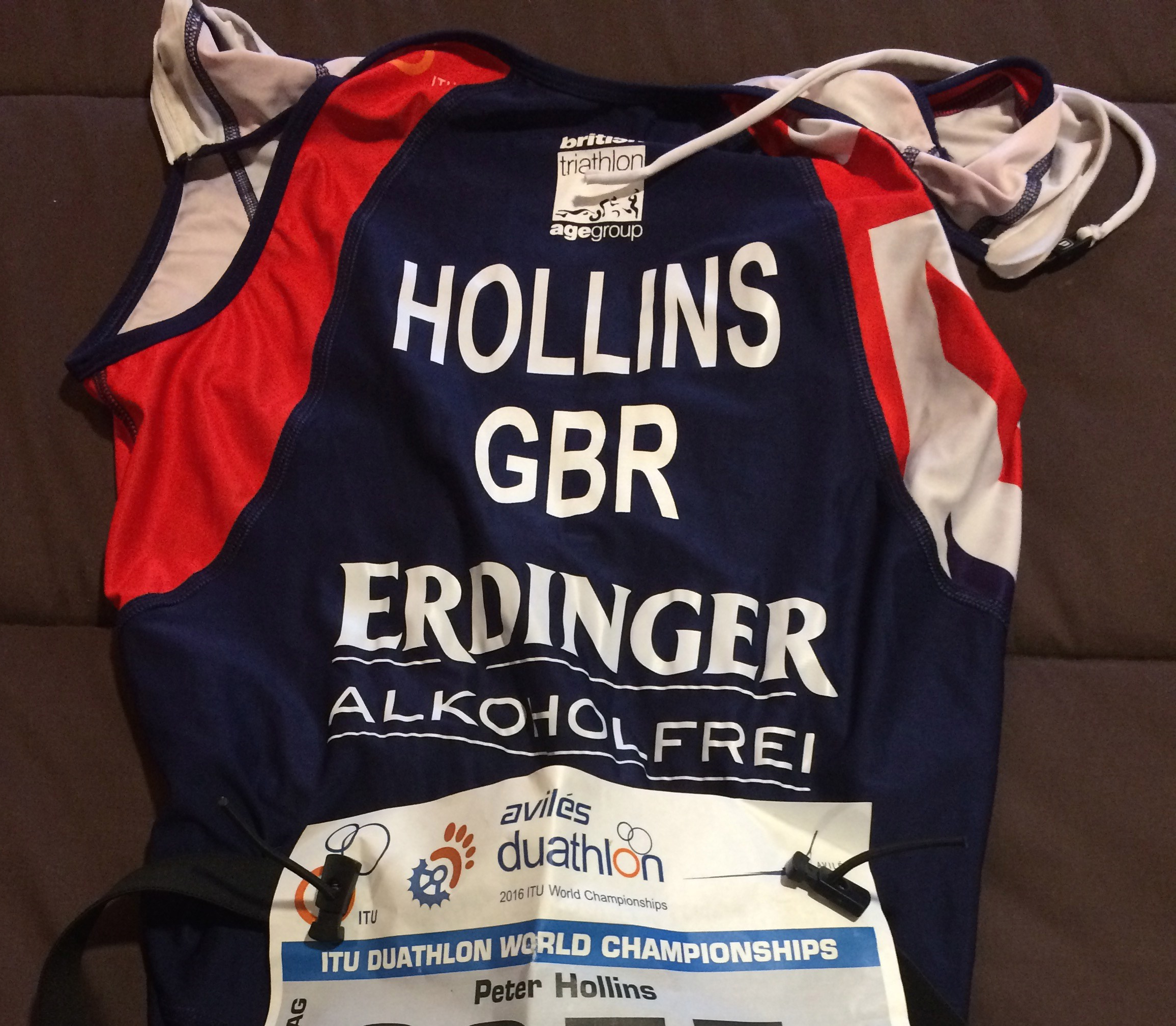
As I recovered over an extremely well deserved Erdinger Alkoholfrei I started to reflect on what had just happened during the race.
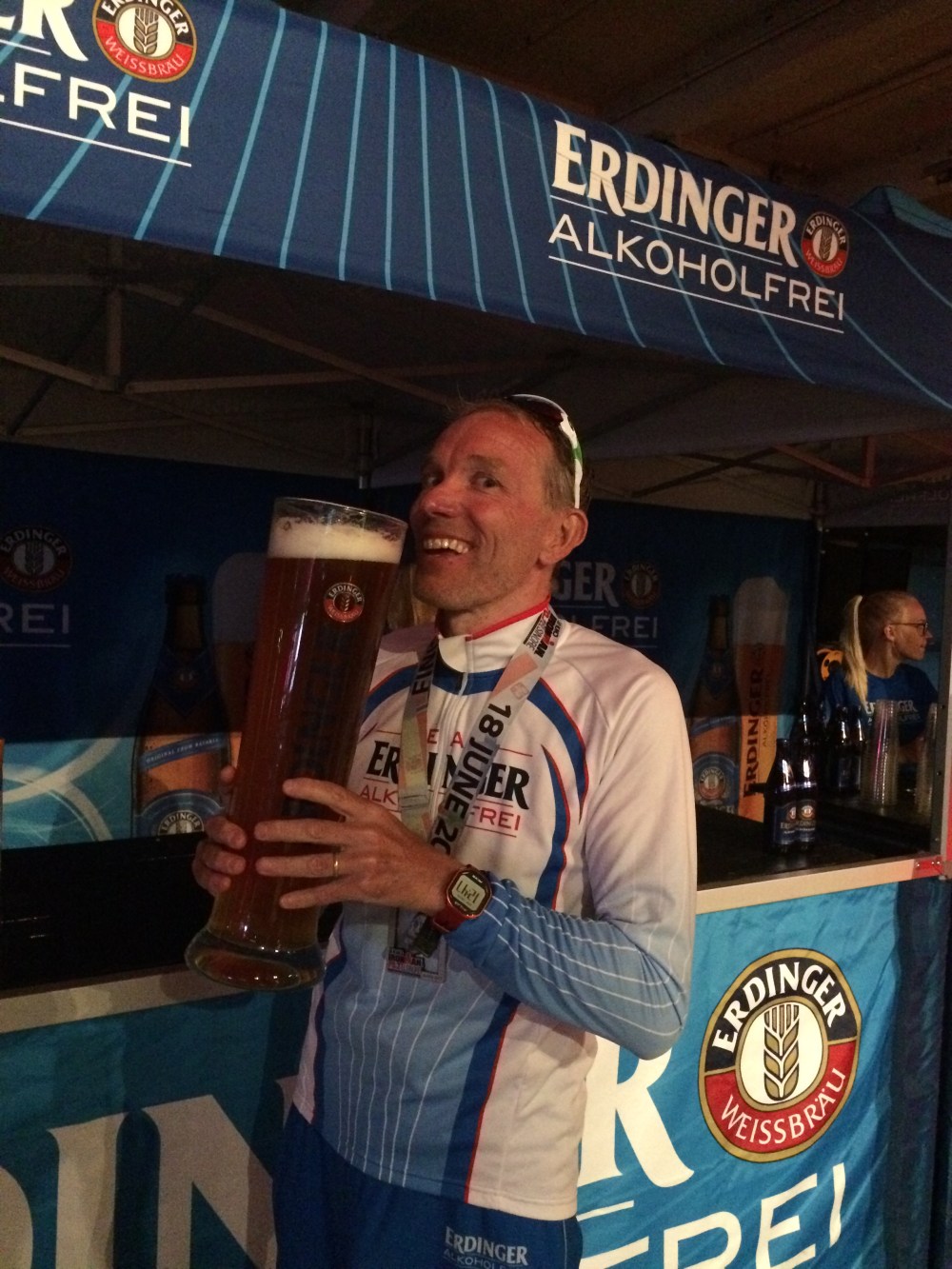 I was really pleased with the way that I’d executed the race and dealt with the unforeseen challenges that it had thrown up. The dogfight of the swim, the constant adjustments on the bike to avoid drafting and my overheating on the run could all have been race wrecking situations, but I kept a really clear head and overcame them. More than that though, as I’d put together a PB swim of 35:23 and I’d banged out a bike split of 2:28:51 despite struggling with overheating over the last hour. That was worth celebrating.
However, as we sipped another Erdinger I couldn’t get beyond the fact that I had run badly. What had caused me to let at least 10 minutes slip away? The competitor in me was desperate to know just how crucial those 10 minutes would prove to be in the final race positions.
It wasn’t long before I found out. I was 10th. 10th in European Championship is good. 10th in Europe is a mark of real progress of how far I have come as a triathlete. But those vital 10 minutes made the difference between 10th and 2nd. This was a missed medal opportunity. But racing, just like life is not about could haves and should haves, its about what you actually do that counts.
Rather than dwell on the medal that might have been I can take away encouragement from the fact that I’m now a contender at this triathlon distance racing in Europe. I know there is more to come from me and that gives me lots of motivation to continue putting in the hard work in training. Two years ago I wouldn’t have believed it. I really am getting faster after fifty.
Kathy and I enjoyed a really chilled evening in Elsinore. We strolled back into town to watch the awards being given, visited the lovely Street Food market and then went back to our hotel to sit in their deckchairs and share a bottle of wine. As the sun began to go down over The Baltic we both agreed that we were so lucky to be able to do these wonderful trips. Elsinore is another one of the real gems of the world that we would never have come to if it wasn’t for racing. Life is good.




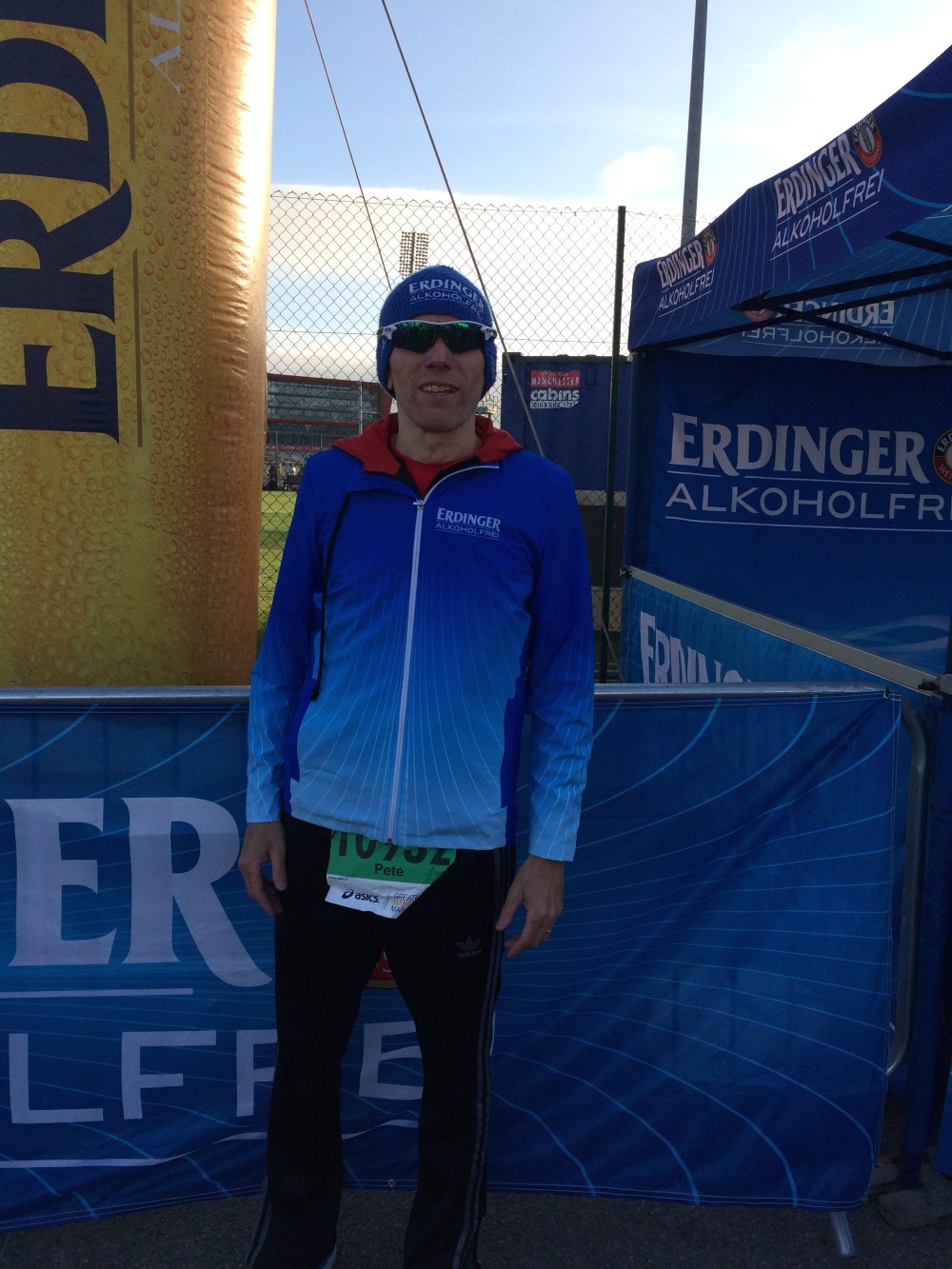
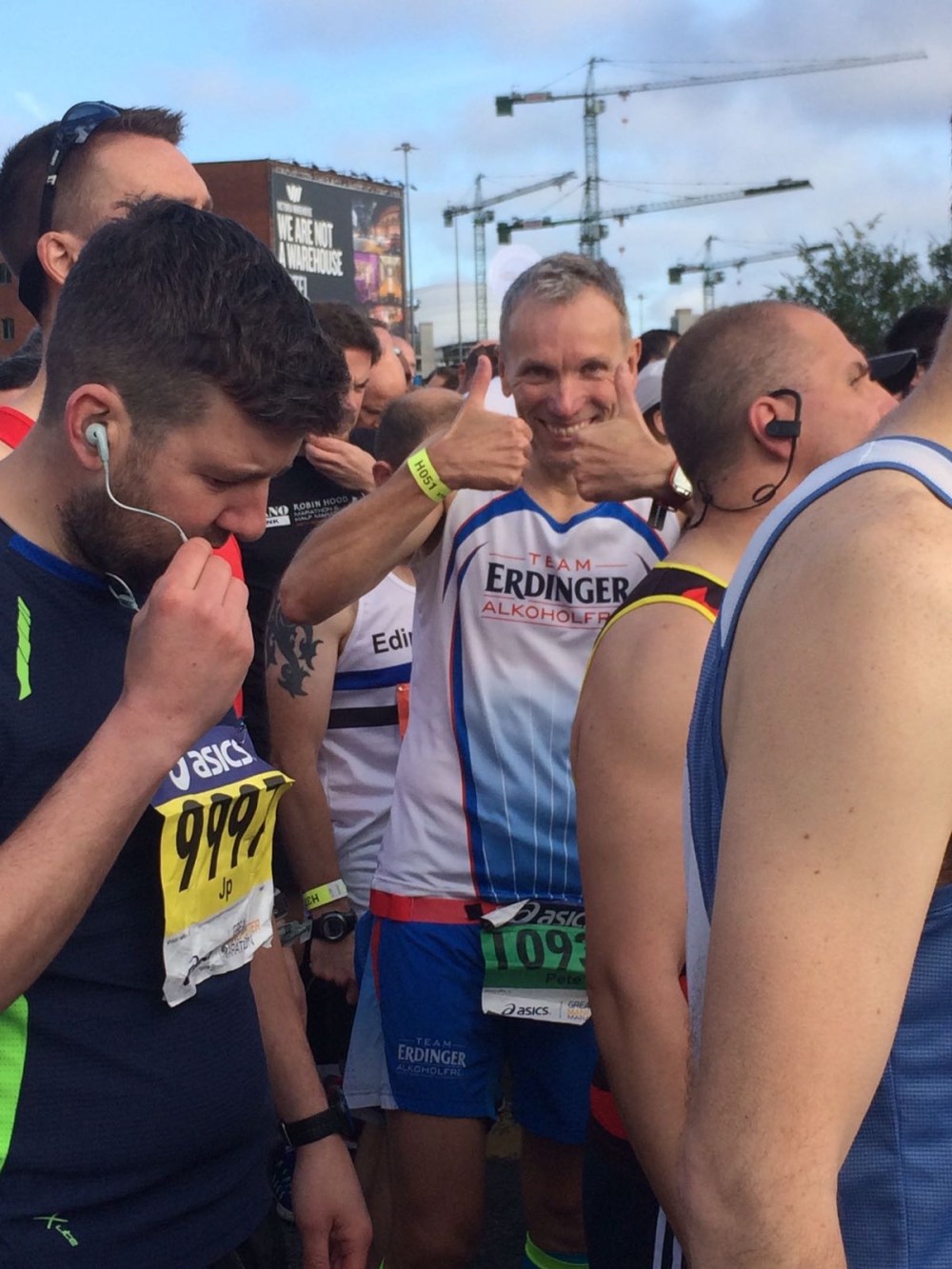 It took a couple of minutes to cross the start-line and then we were underway. Almost immediately there was clear road to run in and so I got straight into a really comfortable rhythm and began the 2nd part of my plan to chat to lots of people. Everyone was in high spirits and we were floating along. I went through the first mile in 7:14 and thought wow that’s very easy. It was a tad quicker than the plan but only just 6-7 seconds ahead. I kept chatting and as we went past the 2nd mile marker I checked again. Oops, under 7 minutes is definitely too quick. It was time to let my new mate, who had run 80 marathons, go and consciously slow down. I realized that in order to get the pace right I needed to focus on what I was doing and so for the next few miles I ignored the rest of the runners and allowed my body to settle into a 7:20 mile rhythm. Once I’d got it by 6 miles I switched my attention again to the brilliant crowds and the other runners. I was loving it and it felt so comfortable that I forgot about the 3:15 pacer somewhere behind me. My heart rate was really under control, my form was relaxed and effortless.
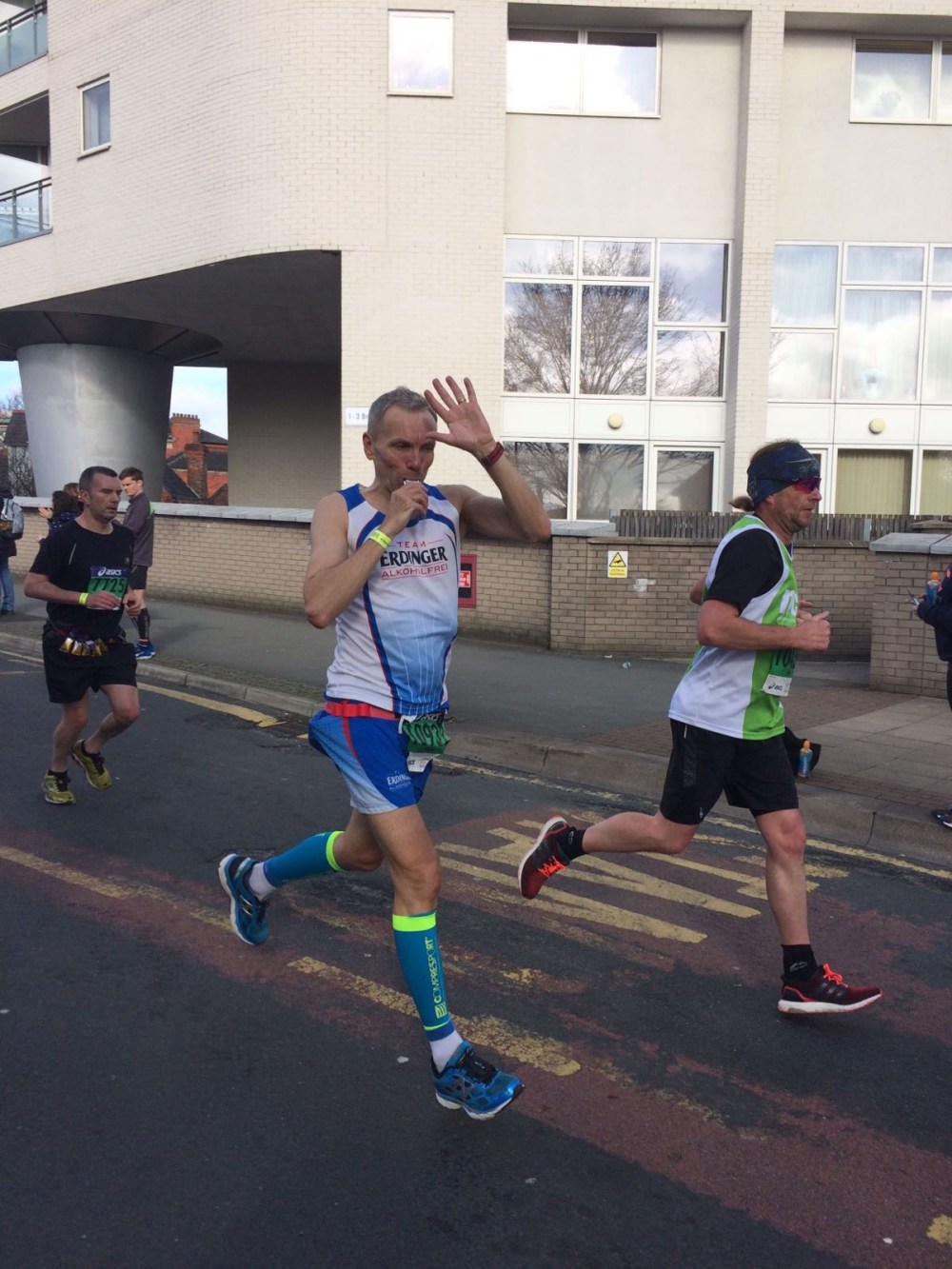 I remembered London, New York and Chicago as races where the crowds were wild and noisy for the whole of the 26.2 miles. Manchester was different. The noise of the crowd support came in waves at different points around the course and this made it even better. As a runner I could really feel the atmosphere building as we headed into the various communities around the course. We’d be able to soak it all up and then we’d then move on into another pocket of calm where we could relax and run through our little mental routines of checking how things were going, before anticipating the next welcome. It was brilliant.
 Once past 21 miles I was counting down. 5,4,3, 2,1 to go and I was still feeling good and holding it all together. I’m not sure counting down helped as I did notice that I was looking forward to stopping more as each mile went by. I was also aware that my hip flexors were tightening, a few blisters on my left foot were building , but there was no sign of fatigue or soreness through my neck or shoulders where I’ve always felt it before. This is surely an indication of just how relaxed I was.
 Coach Annie deserves huge credit for getting me prepared mentally as well as physically and I’d also like to mention Alan Murchison for his brilliant nutritional help. My body felt so strong as I knew exactly what to do to keep myself optimally fueled throughout.
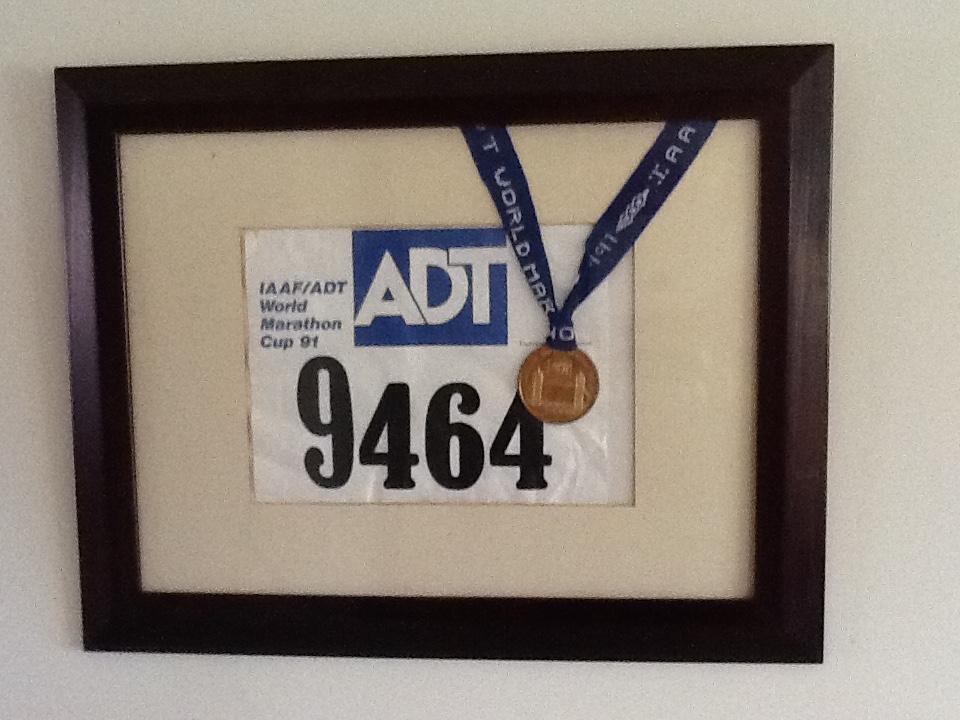 I enjoyed it so much that I thought I’d like to see how fast I could go with some dedicated marathon training. Luckily I got a place in New York City marathon 6 months later. I spent the whole summer preparing, then only managed to shave what seemed like a miserly 3 minutes off my time. This seemed like a small reward for a huge amount of effort and a seed was sown in my head that I should be capable of going quicker.
 In preparation for the original format I entered the Manchester Marathon in early April. Training for this would have given me the extra endurance base for this much longer race and I also felt it was important to get a marathon back in my legs again. Its 8 years since I last completed one and before I move up to full Iron distance racing I want to have dealt with my marathon demons once and for all. During my 30’s and 40’s when marathon running provided the primary purpose for my training I didn’t manage to get to the start-line in physically good shape for any of my previous seven marathons. My body kept breaking down around a sequence of chronic calf and achilles problems that meant long periods of rest leading into these marathon challenges. As a consequence I always found the distance harder than it should be and it has left a bit of a mental scar that needs to be removed. So even though Manchester is now unnecessary to prepare me for my 1st A race of the year I do believe that it will have massive psychological benefits for me over the next few years as I work towards the crazy Iron challenges.
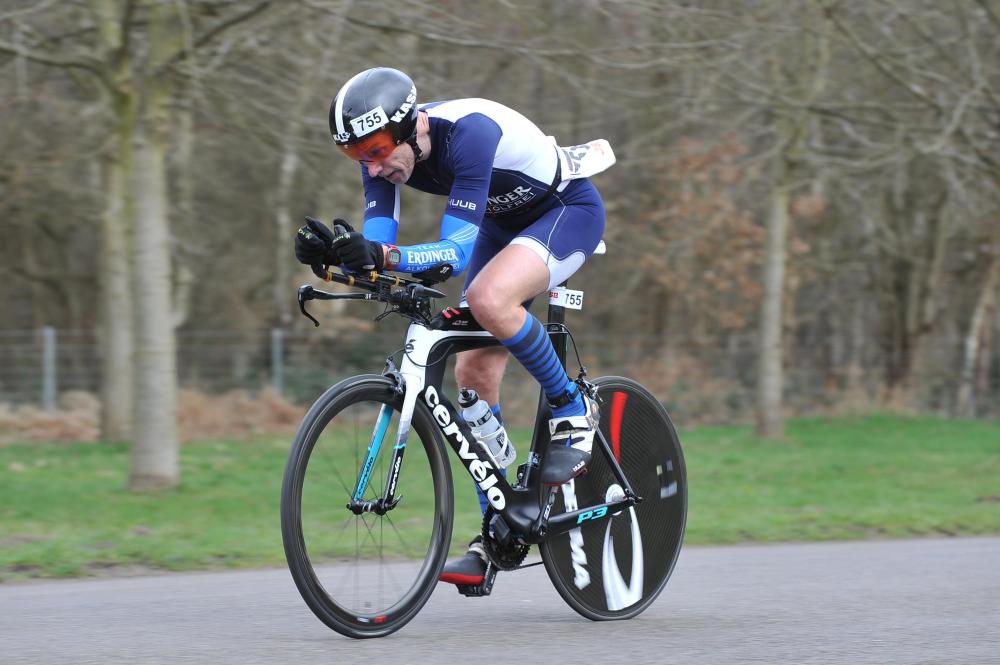 I knew from the run that I’d been behind others in my AG and so on the second lap I was taking a keen interest in race numbers as I passed riders to see if I was making my way through my AG field. About half way around this lap I passed a coupe of guys with similar numbers to mine and I suspected that I now must be near the front. This gave me the encouragement to push harder, especially down the final section along Lime Tree Avenue, the most difficult stretch of the course. The road seemed much bumpier, the surface was like treacle and it was into the wind. The result was a leg sapping section that also tested the brain. “Ignore the pain and keep pushing” is what I was telling myself.
 Faster after 50